
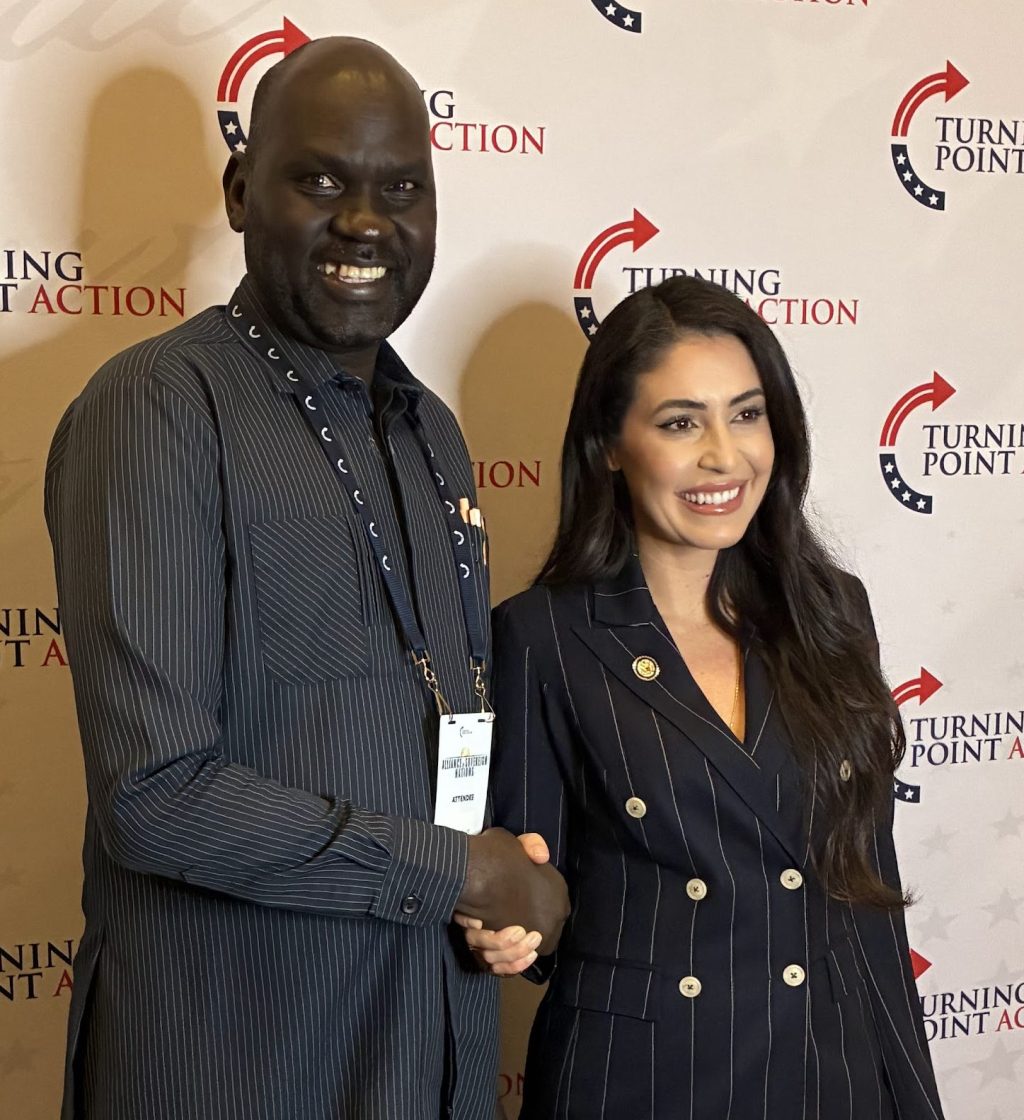
Engaging Power: A South Sudanese Voice at the Alliance for Sovereign Nations Conference
By Miyong G. Kuon
Last week, I traveled to Washington, D.C. I participated in a landmark international conference. The event brought together political leaders, policymakers, and influential voices from across the world. The gathering was organized by the Alliance for Sovereign Nations. This initiative was founded by Republican lawmaker Anna Paulina Luna. It marked its inaugural conference in the first week of March 2026. It was a significant moment for the organizers. It was also significant for participants like myself. We represented nations in crisis and sought global engagement.
I had the honor of attending as part of the delegation of the Sudan People’s Liberation Movement–In Opposition (SPLM-IO), led by our Acting Chairman. Our presence at the conference was both symbolic and strategic. It signaled that South Sudanese voices, especially those advocating for peace, justice, and democratic reform—are actively engaging with international platforms where policy conversations are shaped.
The conference drew a strong presence of conservative and right-leaning leaders from Europe and the United States. Discussions centered on sovereignty, national identity, governance, and global political trends. While these themes reflected the priorities of many Western participants, for us as South Sudanese, the focus was far more urgent and deeply personal.
South Sudan is once again at a critical crossroads. The political and humanitarian crisis has worsened following the detention of First Vice President Dr. Riek Machar and the continued consolidation of power by President Salva Kiir and his inner circle. These actions have not only undermined the 2018 Revitalized Peace Agreement but have also reignited fears of widespread violence, displacement, and instability.
Against this backdrop, our participation in Washington was driven by a clear objective: to engage the United States government—particularly the administration of President Donald Trump—and international partners in addressing the crisis in South Sudan. We sought to communicate the urgency of the situation and to advocate for meaningful intervention that can prevent further deterioration.
The United States has historically played a pivotal role in the birth and development of South Sudan. From supporting the independence referendum in 2011 to facilitating peace negotiations, American leadership has been instrumental. Today, that leadership is once again needed. The crisis unfolding in South Sudan is not only a regional concern but also a test of the international community’s commitment to peace, democracy, and human rights.
For me personally, attending this conference was more than a diplomatic engagement—it was a moment of responsibility. As a journalist, a former public servant, and a member of the South Sudanese diaspora, I carry the voices of those who cannot be in these rooms: the displaced families, the victims of violence, and the citizens yearning for stability and good governance.
The Alliance for Sovereign Nations conference provided an important platform to build connections, exchange perspectives, and highlight overlooked crises. However, the true measure of its impact will be determined by what follows—whether these conversations translate into action.
South Sudan cannot afford silence or indifference. The international community, and particularly the United States, must act decisively to support peace efforts, uphold the rule of law, and ensure that the aspirations of the South Sudanese people are not lost to political power struggles.
Our message in Washington was simple but urgent: the time to act is now.
 MIYONG KUON
Leave a comment